Blog / Trust funds & finance
Perpetual Care Trust Funds, Explained
A perpetual care trust fund is what keeps a cemetery maintained long after every plot has been sold. Here's what it actually is, the one rule that governs it, and what a board should be tracking every year.

What a perpetual care trust fund actually is
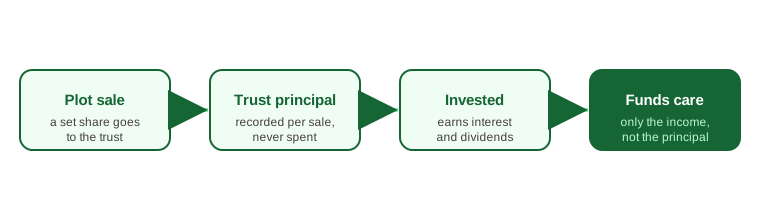
When a cemetery sells a plot, part of that sale is set aside — not spent on the sale itself, but placed into a trust fund dedicated to maintaining the grounds indefinitely. The idea is simple: a cemetery has to be cared for forever, but plot sales eventually slow down or stop. The trust fund is what pays for mowing, road repair, and general upkeep once new sales alone can't cover it.
Many regions require some form of perpetual or endowment care trust for licensed cemeteries, though the exact contribution percentage, minimum balance, and reporting rules vary by jurisdiction. This article explains the general mechanics; always confirm your specific requirements with your local regulator and accountant.
Principal vs. income — the rule that never bends
Every perpetual care trust runs on one non-negotiable distinction:
- Principal — the amount contributed from each plot sale. This is never spent. It stays invested, growing the fund's base.
- Income — the interest, dividends, or investment returns the principal generates. This is the only money that can be spent on actual care and maintenance.
Spend from principal even once, and the fund starts shrinking instead of growing — which defeats the entire point of a perpetual fund. Every recordkeeping mistake in this article ultimately traces back to that line getting blurred.
How the money actually flows
What a board should be tracking every year
- Contribution per sale. The exact amount (or percentage) that moved from each plot sale into the trust, tied back to the specific sale record.
- Running principal balance. What's actually in the trust, separate from any operating account.
- Investment income earned. Interest and dividends for the period, tracked separately from principal.
- Care expenditures. What was actually spent, and confirmation it came from income, not principal.
- An annual reconciliation that a board member — not just whoever manages the books — can read and sign off on.
That last point matters more than it sounds. A trust fund that only one person understands is a liability, not an asset — boards turn over, and the next treasurer needs to be able to pick up the ledger and understand it immediately.
Where this usually breaks down
In practice, the same few mistakes come up repeatedly, almost always in cemeteries still tracking the trust fund in a spreadsheet or a paper ledger:
- Contributions per sale never get recorded consistently, so nobody can reconstruct exactly how the current balance was built up.
- Investment income and new principal contributions land in the same column, so it becomes impossible to tell how much is actually spendable this year.
- The annual reconciliation happens — if it happens — as a manual, once-a-year scramble instead of a running total anyone can check at any time.
None of these are exotic problems. They're what happens naturally when a trust fund is tracked in a general-purpose tool that was never built for the principal/income split in the first place.
How CEMETERRA helps
CEMETERRA includes a perpetual care trust fund ledger that keeps principal and income separate by design, tied to the plot sale that generated each contribution, plus an annual trust fund summary report a board can review at a glance. It's a records and reporting tool, not a substitute for your accountant or regulator's specific filing requirements — but it means the numbers are accurate and reconstructable whenever you need them.
See the full feature list on the cemetery management software page, or start a free account to try it with your own records.