Blog / Records & operations
5 Signs Your Cemetery Has Outgrown Spreadsheets
A spreadsheet is a perfectly good way to start tracking plots. It stops being a good way to run a cemetery at a fairly specific, recognizable point — here's how to tell you've hit it.
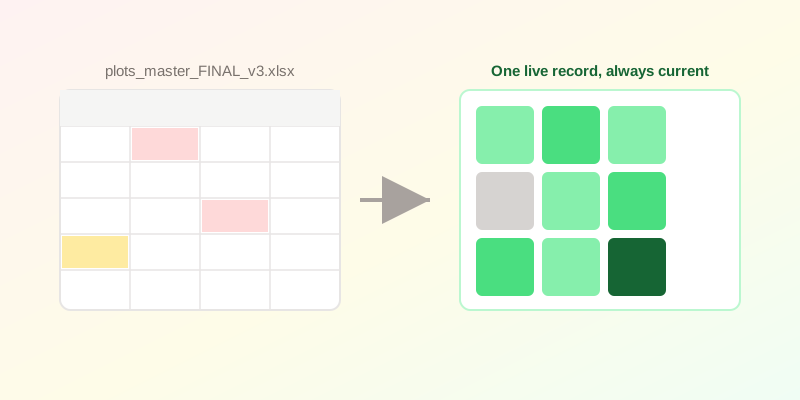
1. Two people have "their own" copy of the plot map
Once a spreadsheet gets emailed around or saved to more than one desktop, you no longer have one set of records — you have several, quietly drifting apart. The moment someone asks "wait, which version is current?" and the honest answer is "check the timestamp," the spreadsheet has already failed at its one job.
2. A renewal date got missed because nobody remembered to check
Burial rights and lease renewals depend on someone actively remembering to look at a date column, on a schedule, for years at a time. That works until it doesn't — and the failure mode isn't a formatting error, it's a family showing up to a lapsed lease nobody flagged in time.
3. A family calls and no one can quickly answer "is this grave already sold?"
If confirming plot status means opening a file, finding the right sheet, and cross-referencing a section and row by eye, that's minutes on the phone with a grieving family for a question that should take seconds. This is usually the first sign staff notice, because it happens in front of the public.
4. The grounds crew works from a printed map that's months out of date
A spreadsheet has no natural way to hand information to someone standing in a field. So the map gets printed, taped up, or photographed once — and every sale, transfer, or correction since then exists only back at the office, invisible to the people actually working the grounds.
5. Onboarding a new staff member means walking them through someone else's system
Every spreadsheet ends up with its own private conventions — which tab means what, which color means reserved, which column nobody's touched since 2019 but everyone's afraid to delete. Training a new hire becomes an oral history lesson instead of a five-minute walkthrough, and the whole system quietly depends on one or two people staying employed.
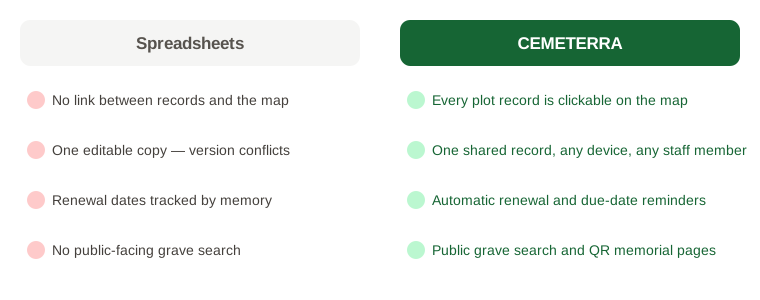
Side by side
This isn't about the size of the cemetery
None of the five signs above are about plot count or budget — a 300-plot church cemetery can hit all five just as easily as a 20,000-plot municipal one. They're workflow problems: too many people touching one file, too much relying on memory, and no link between the records in the office and the ground the crew actually works. That's exactly the gap a purpose-built system closes, regardless of size.
Moving off spreadsheets doesn't have to be a project
CEMETERRA starts from a map you already have and lets you import existing spreadsheet records by CSV — no professional migration project, no per-acre setup fee. Most cemeteries have an account created and their first plot records entered the same day. See the map preparation guide if you're starting from a scanned or photographed plan.
Create a free account and see your own records on a live map, or read the full feature list first.